Synthesis for your soul
Preamble:
Foremost, albeit a reader may interpret The Call to Action to Save Parsi & Irani as stark, and the cross-questioning/referencing as forthright, such directness is grounded in best practice that upfront clarity is a form of respect to both; the subject matter and the addressee.
Unless someone deliberately and ruthlessly behaves in the way identified in the introduction, the Save Parsi & Irani initiative sets out with no one viewed as enemy. It sets out with forgiveness at its core that individuals make mistakes from simply not having known better and that the placement of references not previously available to such individuals may resolve divisiveness, provided honesty is a constant.
Setting aside how our brethren label each other, the initiative recognizes that human being are but minions in the universe’s long-game of good v/s evil, wherein we are prone to failure in seeing the big picture; let alone purposes mightier than ourselves to serve the larger common-good.
As is identified shortly, two overlooked words recited in one of our daily prayers provide us life-saving caution describable as avoiding wilful blindness and deafness. What they do, is permit conscience-aligned discernment. Kind of holding a mirror to the mind.
The synthesis is thoughtfully composed to bring our people together for the express purpose of saving our Religio-Culture with its Parsi & Irani Identity meaningfully preserved intact in its Originality. While its tone may appear stark or forthright, such directness is grounded in best practice that upfront clarity is a form of respect.
A life-threatening situation needs life ‑ saving diagnosis & action, not deliberation when the clock is ticking.
(a) We are who we are (b) where we are (as a globally scattered people), and (c) how we sway in the wind, on account of some severe oversights of the very foundations of who we are supposed to be and what the mantle of being termed Zarathushti really represents. Bit like saying, one reached employment age, but overlooked educating themselves adequately. You might just know someone.
One such oversight is that we are in an eternal grapple between good and evil (within us and in the world around us) which Prophet Zarathushtra strived to guide His Mazdayasni compatriots by means of ‘insightful’ sacred manthric invocation, as in daily prayer recital, and the ‘introspective’ practice of Humata, Houkhta & Huvarshta (throwaway words, some use without any insight or introspection).
Nonethless, some of our people are trying to reinvent the proverbial water-wheel even though it has long been in functional existence. Utilized correctly, its proverbial ‘flow’ (of insights) could irrigate the fields of all our hearts, minds & souls, as also generate good energies to sustain meaningful Zarathushti lifestyle as it is truly meant to be. Not as lip-service, but with a spirit of servitude at heart.
Hence, respectfully with care, this synthesis is dedicated to help our people first recognise what the water-wheel of our innumerable historical insights, precedents and practices offers us to partake peacefully from. Hopefully some may see that it is relatively sensible to partake instead of taking positions over who’s reinvented wheel may work better or wobble less. Particularly when such wheel inventors are observed as being innocently uninformed and cannot match countless centuries of insights provided herein.
Main body:
The real enemy is angaray mainyu who is also termed as ahriman divan who’s dark forces, human beings are prone to overlook. They are the ones splitting our people apart despite us having been warned by our prophet Zarathushtra as reflected through our scriptures; snippets of which are offered as footnotes.
Before describing them, lets’ first cast a little light of that dark side with little parallel context in the manner that trainer wheels help a person learn balancing a bike (Zarathushti life, to be precise).
Remember Star Wars? Remember Jedi, The good guardians of the Galactic Republic v/s Darth Vader, the side of dark & death? Similarly, do you recall Avatar? Beyond cinematic effects, do you discern the underlying themes? No problem if you cannot.
What emerges if one carefully discerns is that the Jedi appear to be somewhat mirroring our Prophet Zarathushtra’s call to walk with the forces of goodwill on the light & right side He has shown us to muster.
And if you have forgotten, you could well unlearn and relearn for which you are wished Good Luck.
It is that were one to overlay the Jedi’s sense of vigilance and the Avatar’s pursuit of balance with our Prophet Zarathushtra’s ethical discipline, then a shared psychological principle emerges. I.e. mental stability could be deemed as dependent on continuous monitoring of one’s perceptions, impulses, and alignments.
When this vigilance is maintained (as in through introspective meaningful prayer) people can ride through storms.
When this vigilance weakens, people drift into distorted thinking, poor judgment, and susceptibility to harmful influence.
Across the world, no matter who you are, people are led astray, or go astray by themselves, when they begin to lose discretion about common universal integrity and basic morality guidelines.
Once that inner filter weakens, even slightly, decision-making disintegrates. People stop checking their impulses, lose balance and let emotion (fuelled by youth-time hormones) override principle and precedent.
Those who are already astray are always willing to appear as friends, because people who have already strayed thrive on making others go further astray. It mirrors how the Dark Side recruits through false reassurance, or how characters like Jet or the Equalists (also found in real-life politics) normalize their own misjudgements by pulling others into the same fog. It is not as if they can suddenly exercise the self ‑ restraint that those who safeguard themselves and their families rely on; a person who has abandoned their own guardrails cannot uphold guardrails for anyone else.
People who have lost their sense of direction often seek similar company, not because they consciously plot harm, but because shared error feels safer than standing alone in correction. They present themselves as supportive, liberating, or “non ‑ judgmental,” yet the ease they offer is the ease of decline. The comfort of lowering standards rather than the discipline of raising them.
This is why the wise remain observant: not suspicious, but clear ‑ eyed, like a Jedi who senses imbalance or an Avatar who recognizes when a path leads toward chaos rather than harmony. The wise understand that influence is rarely neutral, and that a person who cannot govern their own impulses cannot help another govern theirs. So they choose their alignments carefully, maintaining the discretion that keeps a life steady, principled, and protected from unnecessary chaos.
Effectively, the vigilance of a Jedi to not drift and the care of an Avatar to not lose balance are the type of cautions which our Prophet Zarathushtra of countless centuries prior warns us about, and that which conservative, orthodox and traditional Zarathushtees exercise.
What emerges from pondering on both cinematic and scriptural themes together is that Zarathushtra’s ethical discipline, the Jedi’s vigilance, and the Avatar’s pursuit of balance share psychological principles. Mental stability depends on continuous monitoring of one’s perceptions, impulses, and alignments, which occur during the daily prescribed practice of intent meditative prayer. Not as a duty, but as food for the heart, mind and soul. When this vigilance weakens, people drift into distorted thinking, poor judgment, and susceptibility to harmful influence.
Our Prophet Zarathushtra expresses this through Humata, Houkhta, Huvarshta functioning like a rational self ‑ audit: checking thoughts, speech, and actions against stable moral reference points. In psychological terms, this resembles cognitive hygiene as in the ability to catch distortions early, regulate impulses, and maintain clarity under pressure.
The Jedi embody the same principle. Their discipline was built on vigilance: sensing imbalance, regulating emotion, and preventing fear or anger from hijacking judgment. When a Jedi stops checking themselves, drift begins — not through dramatic evil, but through small lapses in clarity.
The Avatar’s journey mirrors this as well: balance is not mystical, but a continuous mental discipline to prevent external chaos from becoming internal chaos.
Collectively, it creates a hypothesis that Mental Health is strengthened when individuals maintain active vigilance over their internal state, continuously checking their reasoning, resisting emotional hijack, and aligning their choices with stable principles rather than impulses or external pressures.
When vigilance lapses, people become vulnerable to drift, distortion, and the influence of those who are already astray. When vigilance is practiced, people remain grounded, discerning, and capable of navigating complexity without losing themselves. The same steadiness expected of a Zarathushtrian adherent, a Jedi Knight, or an Avatar maintaining balance.
Prophet Zarathushtra’s visionary wisdom discerned that talk of good versus evil is not just talking of mythical monsters. It represents the diametrically opposite forces (inside & outside us) that can either help is do good, or pull human beings toward darkness, apathy, and unawareness of light.
Almost no different to how Zarathushtra cautioned His Mazdayasni people to discipline themselves against succumbing to become Kikaan (willfully blind) and Karafaan (willfully deaf), as warned in the Hormazd Khodai prayer, the Jedi effectively strived to stand steadfast so as to not succumb to the dark side. No different to this Conscience Check’s question, where do you stand?
Once upon a time, when we were all on the same side (with Ahura Mazda), our Religio-Culture carried a sacred treasure (ancient knowledge of the cosmic/spiritual word) that is wiser than evil, older than empires, proven more enduring than stone, and resilient to overcome setbacks.
But sadly, when complacency and apathy crept into the hearts/minds of some brethren, the above stated adversaries of Ahura Mazda got to their evil work to prey on those who did not pray, dividing us in the bargain, pitting brethren versus brethren, parent versus children, clergy versus laity, and fidelity versus depravity. A fight where there are no winners.
One may ask, what is it that the adversaries of Ahura Mazda representing supreme Goodwill, Spenta Minyu (Bounteous & Beneficent mentality) and Vohu Manah (The Good Mind under Behman Amesh Spenta’s guardianship do?
angaray mainyu (yes sounds like angry) is Avestan word for a misguided mentality that turns an otherwise good mind destructive. It connotes the hostile evil force that distorts reality, twists patience and understanding and tempts via perceived ease/impulse/convenience, the abandonment of responsibility, some signs of which are mental anger, chaos, and lately, cancel-culture.
ahriman is the first part of a two-worded term Middle Persian era term denoting angray mainyu, further describing its destructive force, the source of darkness and/or deceit. Spelt whichever way, dewan/divan/daeva-aan, it is host to demonic energies whose leader is angaray mainyu. They connote destructiveness; as in evil-minded forces that thrive on people’s confusion, cause their decay, and erosion of their moral clarity. They prey upon the innocent and the uninformed, turning them into expendable cannon fodder in a battle that us minions barely understand.
ahriman Dewan is identified in the Hormazd Khodai prayer. angray mainyu is identified in the Kshnothra Ahurae Mazdao bridge between Hormazd Khodai prayer and the retying of the Kushti.
It is thus sympathy-worthy that in the rat-race of the last few decades and the drift from spare time on people’s hands, some people have forgotten to look into the “light” (bati/divo) to which our daily prescribed prayers are to be recited, and instead have got entangled with the dark side rather than the light side.
Where Ahura Mazda’s prescribed disciplines are to be revered, Ahriman’s ease was chosen.
Where Spenta Mainyu should have been valued, apathy made Angray Mainyu enter.
Where Vohu Manah needed nurturing, people went for the fast-life; as unhealthy as fast-food.
Where the path of wisdom had been tilled for centuries so that people did not get lost, people experimented on new paths (thinking they are inventing anew), but got lost.
Where responsibility was the way of life, abandonment, betrayal and recklessness set in.
Where life had to move constantly to the light side, people began sliding into darkness.
Where once the bati/divo served as a lighthouse emitting visibility, and the daily prescription of the Kushti invocation served as a navigator through the mind-map of good and evil, both “light” and “Kushti” got viewed as inconvenience instead of being valued as mechanisms to recalibrate our mental health and our moral compass’ alignment to Ahura Mazda.
Where people should have stood firm, they sway, depending on who they socialize with.
Both aforementioned dark terms describing such evil are those that attempt to overtake the ‘Good Mind’ with deceit and stealth. They mislead by causing confusion, quiet erosion of attention and dimming of one’s conscientiousness. More words can be used, but you’ll get the picture. As you may have experienced with sinister people, every facet of angray mainyu / ahriman dewan got in the way of our people seeing things more clearly. Our lack of discernment and disciplines has ended-up harming our people and our original Religio Culture, and we have to take support from the following to undo our mistakes.
Fortunately, our ever-available Leaders are Ahura Mazda, Spenta Mainyu, Vohu Manah, Amesha Spentas, Yazatas and our Atash-Behrams/Agiyarees which host sacred flames mirroring the Sun, the Universal life, warmth and energy-giver. Each celestial being is metaphorically referred to as a source of light in the form of enlightenment to dispel darkness.
Furthermore on the fortunate side, we are not short of role-models to emulate. Countless millions of our Ancestors role-modelled Fidelity to our Religio-Culture when Ancestral Iran repeatedly suffered invasionary domination. Since then over 13 centuries, countless Mobeds’ fidelity and sacrifices to serve at our Places of Worships has gone unappreciated. Even in the last 100 years, countless Zarathushtees have devoted their lives to educate and lead by example but some of our errant brethren haven’t learnt.
So, to all those claiming we lack leadership, please know you could not get better leaders and role-models than the above along with various spokespersons who are always speaking up, if only people cared to hear. But yes, our leadership could do better, just as laity can do better. Both could get off their backsides and look at the past behind them, to better see ahead.

However, here is some additional inspiration:
This is Dr Jonas Salk (1914 to 1995), the founder of the polio vaccine. He turned down millions of dollars by refusing to patent his formula, so that children all over the world could be saved from the scourge of polio. His words are most pertinent to Parsi-Irani.
“our greatest responsibility
is to be good ancestors”.
Salk highlighted that today’s descendants are tomorrow’s ancestors. Hopefully that evokes introspection as to with what level of responsibility would you have lived your life as Parsi-Irani.
Would it be “just for I, me & myself”, or beyond that?
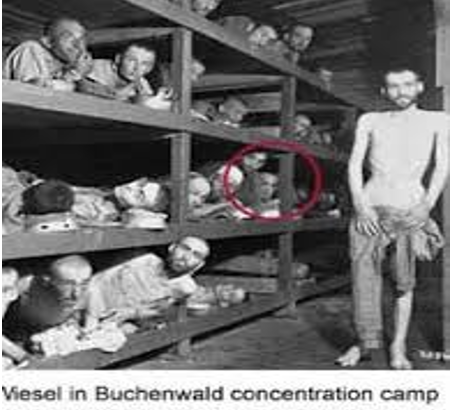
Nobel Prize Winner Elie Wiesel and Holocaust survivor who saw amongst the worst types of evil, is another inspiration. His words too are very pertinent to lax Parsi-Irani.
“To forget, would not only be dangerous but offensive; to forget the dead would be akin to killing them a second time”.
He just about echoed the wisdom of our Religo-Cultural-Historical monthly baaj, yearly varsi and farvardigaan/mukhtaad prayer system designed to never let our ancestors be forgotten.
Sadly, some of our brethren have shamefully forgotten. Hope you are not one of them.
Point in making is that nothing material counts at death. What counts are good thoughts, words and deeds, and the FIDELITY with which your inherited Parsi-Irani IDENTITY was upheld.
OUR UNIQUE IDENTITY IS NOT AN ORNAMENT.
It is the distilled memory of millions who lived (or died), struggled, prayed, and persevered so that you Parsi-Irani inherit a name and a Religio-Cultural-Spiritual linkage to an awe-inspiring history. You are the last surviving link in that chain; a thread in a tapestry nearly erased by conquest, dispersion, and demographic collapse.
Your existence as Parsi-Irani is not only statistically extraordinary, but a historical anomaly. Leave aside you, even your recent Forebearers would not have existed had it not been for extraordinary Godly intervention that made our ordinary ancestors - extraordinary. At Navjote and Naavur, trust was placed in your hands by ancestor upon ancestor who diligently endured what could have extinguished them. And so it better not be you who lets your spark or that of your progeny be extinguished through cross-cultural matrimony.
Thus without prejudice, we must now speak to that uncomfortable but undeniable truth: Cross-cultural matrimony, by its very nature disrupts the organic intergenerational transfer of the spiritual foundations of Parsi ‑ Irani identity.
This is not a judgment but recognition of mathematics. By now, the references which preceded this synthesis should have already conveyed abundant rationale to the reader.
If we were numbering in the millions, if our Places of Worship were full, if our youth were plentiful, if our demographic base were secure, then a few exceptions would not threaten continuity. But we are not millions. We are now likely to be less than 50,000 worldwide of active age, and less of marriageable age. A number that makes us compete for extinction status with some endangered species that may have larger populations.
When a community is this numerically fragile, every choice carries generational consequences. This is not prejudice. It is demographic reality. Every marriage shapes the future. Every child, or its absence adversely impacts the trajectory of survival.
To marry within the faith is not an act of exclusion. It is an act of stewardship.
It is not about superiority. It is about continuity. In-Faith marriage is a declaration that you understand the fragility of what you carry. A commitment to ethically preserve the ethnic/cultural/spiritual architecture that survived against the harshest of odds, and hence deserves preservation with the most honest of efforts.
It is about honouring a lineage that has already endured near ‑ extinction and it is now about ensuring that the flame/spark entrusted to you does not go dark in your generation or beyond. Whilst respecting all cultures, we also foremost need to acknowledge that “continuity with total ethnic and spiritual originality is only possible when a Parsi ‑ Irani marries within our Faith”.
A micro-community cannot afford apathy. A vanishing people cannot pretend that numbers do not matter. One would not run their personal finances in such foolhardy a manner as some Parsi-Irani compute our trajectory. A fragile lineage cannot survive without deliberate choices.
You arrived naked. You will depart naked. But between those two moments, you were entrusted with something sacred, the identity of a people who refused to be vanquished.
Do not cast it away.
Do not dilute it into oblivion.
Do not let the story end with you.
Do no such thing which jeopardizes it.
We have erred by forgetting our history and failing to see ourselves as a continuum of history in the making. Worse that as a collective of recent past, the present and imminent future, that we have become a shocking shadow of our Forebearers despite them leaving behind exceptional role-modelling for us to emulate.
We have bungled as a community despite the many efforts of yeoman Zarathushtees who died trying, but it was as if they were speaking to the dead (morally). It is not for lack of trying hard on the part of such noble Zarathushtees.
Unlike nations, we as a people do not even seem to realize the most dangerous threat to our Religio-Culture in current times is erosion of its Identity by abandonment of its values.
Hence these questions of conscience and fairness.
(Q 49)
When ancient civilizations such as China (≈1.41 billion), India (≈1.47 billion), Japan (≈122 million), the Republic of Korea (≈51 million), or European ones like Hungary (≈9.6 million), Poland (≈38 million) and others; each possessing old cultural lineages, substantial demographic buffers, and enforceable border ‑ control regimes, are actively implementing policies to safeguard the continuity and integrity of their national identities against cultural dilution, then on what rational, demographic, or historical basis do we, the global scattered Parsi ‑ Irani community numbering scarcely one hundred thousand worldwide, contemplate an open ‑ door posture that exposes our already ‑ fragile identity to irreversible erosion?
(Q 50)
When extremely Ethno-Religio-Centric nations like Saudi Arabia (≈32 million), UAE (≈8 million), Qatar (≈2 million), Kuwait (≈ 4 million), Bahrain (≈12. million) totalling to between 42 and 44million ultrarich Muslims (migrant population not included) exercise tough absolute control and ultra-strict regulatory frameworks governing their people, migrant employees and tourists, even though their majority faith faces no threat whatsoever, then it raises a legitimate question for Parsi-Irani as to how us borderless, defenceless, Religio-Culturally unprincipled/unstructured/unled people can self-sustain their Religio-Cultural identity ensuring the integrity and safety of their Sacred Places of Worship?
(Q 51)
In other words, if nations with populations exceeding ours by factors of ten thousand to one are taking a range of defensive measures to preserve their Religio-Cultural inheritances, then what precisely are we as one of the smallest Ethno ‑ Religious communities on earth, imagining when we propose policies that no prudent civilization of scale would ever adopt?
(Q 52)
Do any of the proponents of open-door policies such as FEZANA, WZO, ZAGNY, ZTF have an answer to this question?
(Q 53)
Is it not, therefore, a matter of simple demographic arithmetic and cultural self ‑ preservation that an open ‑ door policy for a micro ‑ population such as ours constitutes not inclusivity, but existential negligence?
Given the historical and linguistic origins of the terms Pars and Parsi, Iran and Irani, which denote specific cultural and ethnolinguistic identities, it cannot be ignored that a cross ‑ cultural progeny, through no fault of their own, will encounter natural genetic limitations in attaining full immersion within the Parsi ‑ Irani Religio ‑ Cultural tradition. Except for perhaps in rare cases, such progeny may, upon reaching maturity, choose to wholeheartedly embrace the Faith and heritage of their Parsi ‑ Irani parent and grandparents. Otherwise, such progeny may simply find themselves, again without fault of their, trying to navigating the dilemma often described metaphorically as having one’s feet between two boats.
If you claim to appreciate our Religio ‑ Culture, then the only way to preserve it is to unite upon the common ground of history, inherited wisdom, precedent and rationality without including amidst us the personal inputs or inferences of non-Parsi-Irani.
(Q 54)
When we have been gifted so much, with so much difficulty by our ancestors that which we have not become responsible enough to know and appreciate, how fair is it that we make space to include the inputs of others into our Religio-Cultural matters?
Such observations and questions are not insults; they are meant to arouse introspection.
(Q 55)
If as Parsi-Irani born to two Zarathushti parents, (a) your own wheels wobble, i.e. you are not fully committed to your Religio-Culture, (b) you struggle to remain aligned with the very vehicle your ancestors built for you or (c) that you sway/swing in the wind as if without a radar, i.e. you are not keen to ensure that your progeny keeps your ancestral bloodline’s originality intact as trusted to be; then you must reflect deeply on what makes you believe that a new wheel you produce through cross-cultural matrimony (half the size & strength of your original wheel), will remain a steady wheel?
What makes you think it will not lose alignment at the first pothole it encounters on its journey?
Is it even remotely reasonable to imagine that your cross ‑ cultural progeny will hold firm to your grandparents’ faith with greater resolve than you, when you yourself are wobbling with the full inheritance of lineage, culture, and upbringing?
(Q 56)
When Nations are behaving like Civilizations again, how ridiculously reckless is it on the part of those Parsi-Irani to not protect our own hard-earned Civilization?
- China operates in civilizational terms,
- Japan operates in civilization terms,
- India speaks in civilizational terms,
- Islam wants to convert the world to their religion,
In context of which the West is awakening to preserve its own civilizational construct.
This is not prejudice. This is not condemnation. This is straight talk, so that we stop fooling ourselves and prevent circling around the issue by not naming the real elephant in the room.
As has already been caveated, this is not a judgement upon any individual. It is simply the recognition of practical mathematical reality and clear logic, articulated to awaken responsibility.
Awakening begins with conscience,
Conscionable honesty about what you did, or did not do, and where you now stand.
Awakening provides a reality check about what we risk losing,
Responsibility about choices that may either dissolve or preserve a once-robust Religio-Culture, ensuring it is not undermined by infidelity whilst personal fidelity is direct to carnal interests.
It is not clergy, conservatives, orthodox & traditional who obstruct those interests.
Evil wiggled its way in to your Ears, cheated your Conscience, and stole your Soul.
God Forbid.
Go, recover your conscience and soul. There are ways to undo culpability.